
Oregon's hotel landscape spans high-desert ranch towns, forested river valleys, and Cascade Mountain resort corridors - and the best design hotels here reflect that geographic diversity. From a 4-star historic property steps from the Oregon Shakespeare Festival in Ashland to a full-scale Cascade resort in Sunriver, these eight properties each serve a distinct traveler profile. This guide breaks down what to expect, where to stay, and how to book smart across Oregon's most compelling accommodations.
What It's Like Staying in Oregon
Oregon rewards travelers who plan around its geography - distances between major attractions are significant, and choosing the right base city directly affects how much time you spend driving versus exploring. The state's tourism concentrates heavily in summer, with coastal towns and Cascade destinations seeing around 70% of annual visitors between June and September. Car travel is essential in most of Oregon outside Portland, making hotel location and parking availability a practical priority, not just a convenience. Design-forward hotels here tend to lean into the natural landscape rather than compete with it, giving stays a distinctly Pacific Northwest character.
Pros:
- Diverse landscapes within one state - high desert, Cascade peaks, river valleys, and wine country - mean hotel stays can be combined with genuinely different experiences within a single trip.
- Oregon's hotel market outside Portland offers strong value relative to California or Washington equivalents, with well-equipped properties at mid-range price points.
- Free parking is standard at virtually every hotel outside Portland, removing a friction point that plagues urban travel on the West Coast.
Cons:
- Rural and semi-rural locations mean limited public transport - travelers without a rental car will find their options significantly restricted between destinations.
- Summer wildfire smoke periodically affects air quality across Central and Southern Oregon, which can impact outdoor-focused itineraries from July through September.
- Many of Oregon's most scenic areas - Smith Rock, Crater Lake, the Rogue River - require advance planning around entry permits and peak-season congestion.
Why Choose Exceptional Design Hotels in Oregon
Design hotels in Oregon don't follow a single template - the category here spans a renovated 1900s historic inn in Ashland's arts district, a full Cascade Mountain resort in Sunriver, and recently renovated chain properties that have adopted a distinctly regional character. What unites them is intentional aesthetic decisions tied to their surroundings, whether that's bronze wildlife sculptures and native-plant gardens in Madras or a spa and multi-pool complex framed by Cascade ski terrain. These properties typically run around 25% higher than standard roadside motel rates in the same cities, but the gap narrows significantly outside peak summer months when promotional rates are common. Room sizes are generally generous by Pacific Northwest standards, particularly in resort and mid-scale properties, where suites and family configurations are the norm rather than the exception.
Pros:
- Design hotels in Oregon consistently offer amenities - indoor pools, fitness centers, hot breakfasts - that budget motels in the same corridors don't provide, narrowing the value gap at the full-cost level.
- Many properties integrate landscape-specific design elements (native plants, regional art, mountain-view orientations) that make the stay itself part of the Oregon experience.
- Breakfast is frequently included at design-adjacent properties in this market, reducing daily per-person costs in areas where restaurant options can be sparse.
Cons:
- The best design properties in Oregon book up quickly for summer weekends, particularly in gateway towns like Ashland and Sunriver, requiring reservations well in advance.
- Some design hotels in smaller Oregon cities like Madras or Klamath Falls are the standout property in town - meaning limited alternatives if your preferred dates are unavailable.
- Resort-style properties such as Sunriver carry additional fees for recreational amenities that are not always included in the base room rate.
Practical Booking & Area Strategy
Oregon's design hotel market is geographically spread, so base-city selection shapes your entire itinerary. Ashland and Medford in the Rogue Valley are the strongest dual-base option for Southern Oregon - Medford's Interstate 5 corridor gives fast access to Jacksonville's historic district and Emigrant Lake, while Ashland puts you walking distance from the Oregon Shakespeare Festival and Lithia Park. In Central Oregon, Madras sits within 25 miles of Smith Rock State Park and serves travelers heading toward the high desert, while The Dalles anchors the Columbia River Gorge corridor roughly 121 kilometers from Portland International Airport, making it a logical first or last night stop on a road trip. Sunriver, positioned near the Cascade Range ski trails and award-winning golf courses, is best approached as a multi-night destination rather than a transit stop. Book at least 8 weeks ahead for any summer stay in Ashland or Sunriver - these markets tighten faster than most travelers anticipate. For the Grants Pass area, the Rogue River's white-water rafting season peaks in late spring through early summer, which drives short but intense booking pressure for river-access properties.
Best Value Design Stays
These properties deliver strong amenity sets and intentional design touches at price points that make them accessible across most travel budgets, spread across Oregon's key gateway cities.
-
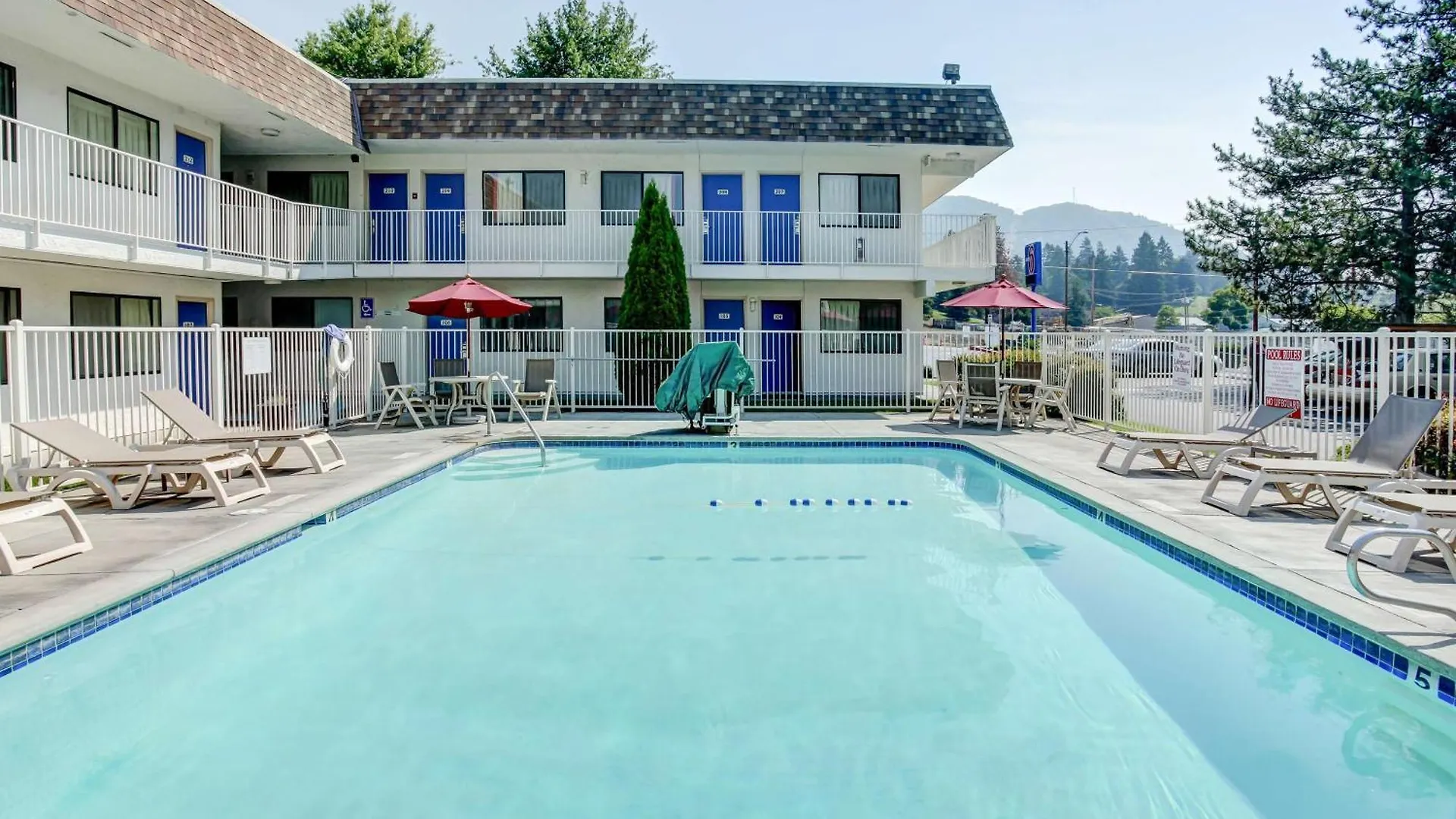
1. Motel 6-Grants Pass, Or
Show on map


 Check-infrom 15:00 until 23:59Check-outuntil 11:00
Just a few rooms left at the best rate!
fromUS$ 54
-
2. Super 8 By Wyndham Klamath Falls
Show on map


 Check-infrom 14:00 until 23:59Check-outuntil 12:00
Just a few rooms left at the best rate!
fromUS$ 59
-
3. Quality Inn
Show on map


 Check-infrom 14:00 until 23:59Check-outuntil 11:00
Rooms filling fast – secure the best rate!
fromUS$ 63
-
4. Inn At Cross Keys Station
Show on map


 Check-infrom 14:00 until 23:59Check-outuntil 11:00
Just a few rooms left at the best rate!
fromUS$ 103
Best Premium Design Stays
These properties offer elevated amenity profiles, distinctive architectural or landscape identities, and positioning in Oregon's most tourism-active corridors - suited for travelers who want a hotel that contributes to the experience rather than just facilitating it.
-
5. Hampton Inn Medford
Show on map


 Check-infrom 16:00 until 23:59Check-outuntil 12:00
Hurry – almost gone at this price!
fromUS$ 110
-
6. Fairfield By Marriott The Dalles
Show on map


 Check-infrom 15:00 until 23:59Check-outuntil 12:00
Hurry – almost gone at this price!
fromUS$ 129
-
7. The Peerless Hotel
Show on map


 Check-infrom 16:00 until 23:59Check-outuntil 11:00
Hurry – almost gone at this price!
fromUS$ 170
-
4. Sunriver Resort
Show on map


 Check-infrom 16:00 until 23:59Check-outuntil 11:00
Rooms filling fast – secure the best rate!
fromUS$ 184
Smart Travel & Timing Advice for Oregon
Oregon's peak travel season runs from late June through early September, when Smith Rock, the Rogue River, and Cascade resort areas operate at full capacity and room rates at design properties rise by around 30% compared to shoulder season. Ashland's Oregon Shakespeare Festival runs from February through October, creating sustained booking pressure at The Peerless Hotel and surrounding properties that doesn't follow a simple summer-only pattern - festival weekends in April and May can price and book comparably to July. The Sunriver and Cascade Mountain corridor peaks sharply in both summer (hiking, golf) and winter (ski season), meaning there is effectively no true off-season at that property; booking 8 weeks ahead is the reliable minimum for preferred room types. For Medford, Grants Pass, and The Dalles, shoulder season - mid-September through October - offers the best combination of mild weather, reduced crowds, and more available last-minute rates, particularly midweek. Central Oregon including Madras benefits from the eclipse tourism effect, with total solar eclipse events historically causing area-wide sellouts months in advance - check regional event calendars before assuming availability. Minimum stays of 2 nights are worth targeting across most Oregon design hotels to offset the driving time between destinations and to engage meaningfully with activity-heavy surroundings like the Rogue River or Cascade trails.


